EQUIPMENT INSPECTION
All height safety PPE must be regularly inspected by an independent competent person, and those inspections recorded and retained by the owner. The person is ‘independent’ provided that they are not a user of the item they are inspecting, but they can be employees of the company who owns the equipment.
Every item of PPE must be marked with the CE symbol showing compliance to one or more EN standards. In cases where the standard can vary (such as a harness) the EN standard must also be marked. A serial number, batch or other code must indicate the year of manufacture, and the name of the manufacturer. There will also be a 4-digit number starting with zero, which is the ID of the testing agency who certify CE compliance – don’t confuse this with the date!

For fall arrest PPE (harnesses, lanyards, blocks, wire systems, etc) this must be done at least once a year (defined in BSEN365) and for abseil/rope access equipment it must be done every six months (defined in LOLER). However the WAHR adds to this, stating all PPE must also have a written independent inspection ‘after every exceptional circumstance which may affect the safety of the item’ – such as exposure to chemicals, heat, a fall (of the user OR the item) or any physical damage.
These written inspections must be kept for the lifetime of the item, and PPE not ‘in inspection’ cannot be used. The records should allow the item to be traced to the point of purchase and thereby to a certificate of EN conformity.
As well as these written inspections, the user of fall protection PPE must complete a visual and tactile inspect of the equipment before and after every use.
These before and after inspections need not be written down, but are very important. They identify damage, wear and tear, missing components and other issues which make the PPE unsafe BEFORE use, plus the need to clean, dry or repair the item AFTER use. If you find any faults with your PPE, you must report it and get the item reinspected.
When inspecting your PPE, you should consider all of the issues identified during your training course, and any dangers listed in the product instruction manual. Common issues include:
- Physical damage to fabric (broken threads, tears, cuts, overloading)
- Damaged stitching (on lanyards, harnesses, etc)
- Burns from direct heat or friction
- Weakening from exposure to excessive amounts of UV light
- Exposure to chemicals (acids, alkalis, solvents or cleaning agents)
- Rust and corrosion of metal components
- Reliable and correct operation of moving parts springs and hinges
- Damage from a fall (or the item being dropped) from height
You should only use PPE that you are confident is safe. If in doubt, ask first!
A rescue harness EN1497 is primarily designed to effect a rescue, as the casualty is supported in the vertical position. This is ideal for confined space where the normal means of access and egress may be restricted. Most rescue harnesses are designed as fall arrest harness EN361 with the added attachment.
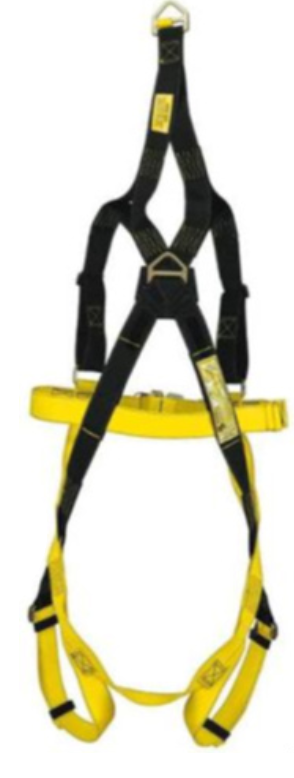
Under no circumstances must this rescue attachment be used as fall arrest.
Tripods
This equipment is designed to provide a light weight portable overhead anchorage for the fall arrest, winch and retrieval device to be connected. Due to its design the equipment is telescopic legs for ease of storage, transportation and handling. (EN795 Class B)
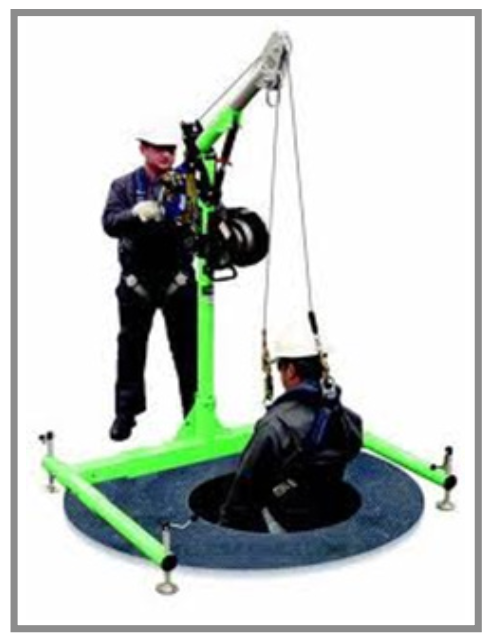
Retrieval System (EN360 & EN1496 A&B)
A fall arrest system is designed to protect the worker should they fall. They are not to be used as a winch under normal working procedures ONLY emergecies.
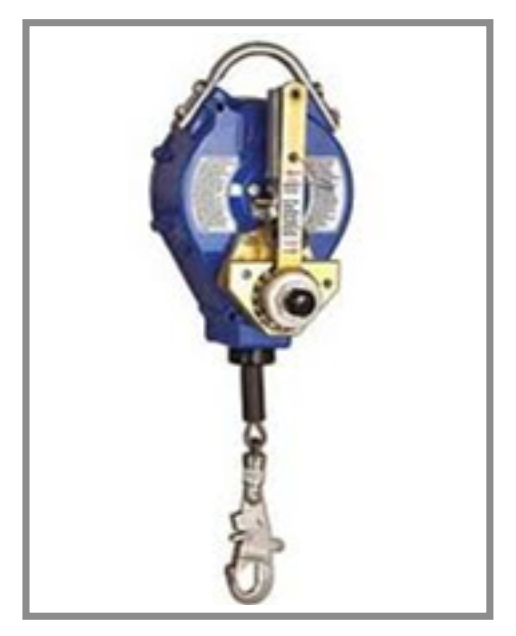
Winch A man riding winch may be used when a ladder access is not available, or the risk classifcation states it must be worn NC2/3.
(EN1496 Class B)
Machine Directive